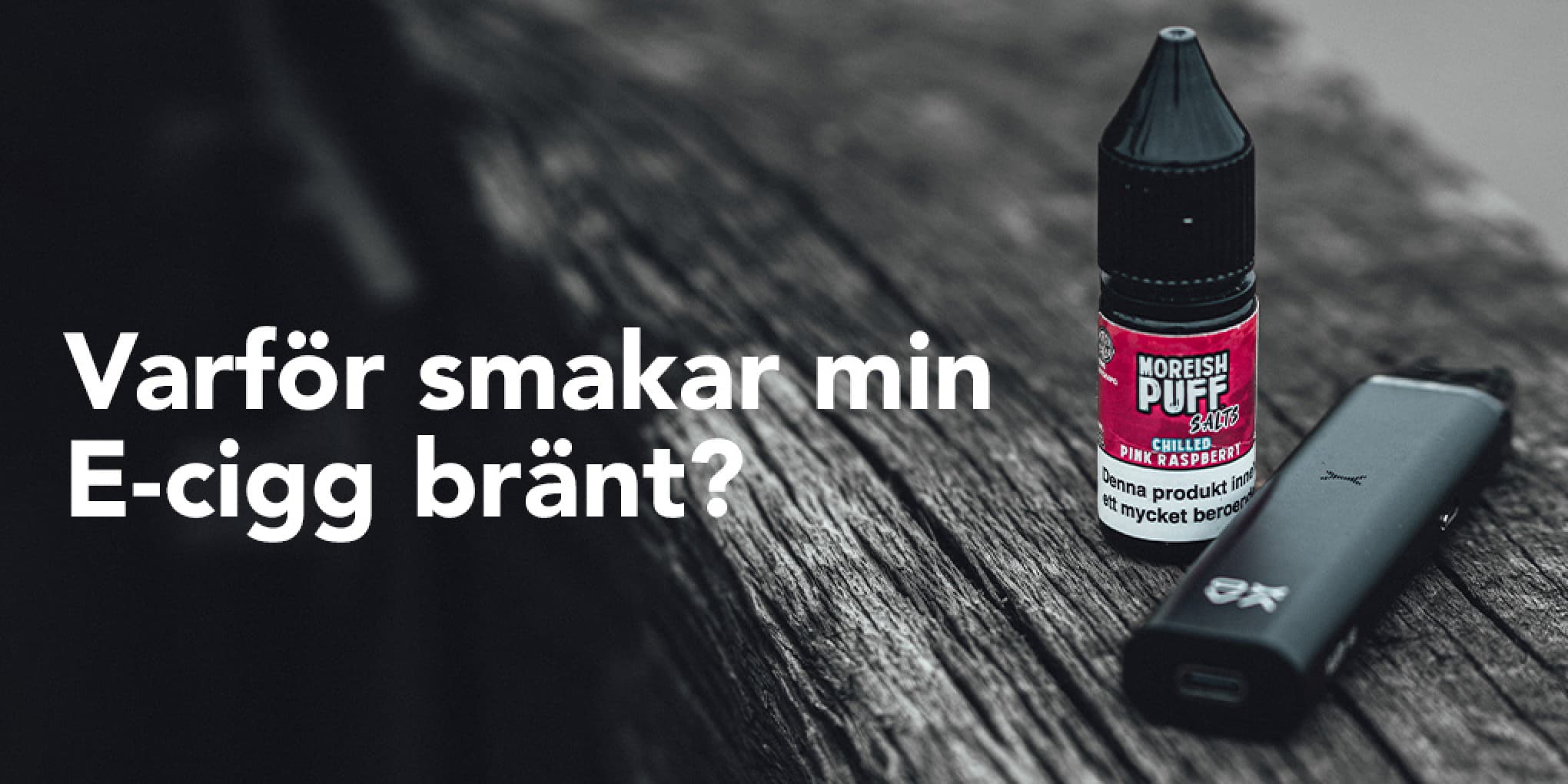

Here is an overview of the basics of PG (propylene glycol) and VG (vegetable glycerin), along with some tips for finding your ideal ratio for your e-liquid.
What Is Propylene Glycol (PG)?
Propylene glycol is a colorless, nearly odorless alcohol. Its technical and chemical name is propane-1,2-diol. This tells us that it has a backbone of three carbon atoms, with two oxygen-hydrogen (OH) alcohol groups attached to the first and second. It is widely known to be safe and is non-toxic. As a result, it is used in a wide range of different consumer products.
It has many useful properties, including being a humectant (meaning that it helps retain moisture), a preservative, and a solvent. Because of this, it is used in cosmetics, pharmaceuticals, human and animal food, and many other products. It is also easy to vaporize, which has led to its use in asthma inhalers and e-liquid.
What Is PG Used For?
Propylene glycol can be found in various common household items. Among other things, PG is included in the following products:
- Nicotine inhalers
- Toothpaste and other oral hygiene products
- Medical products used orally, injected, or as topical formulations
- Pet food
- Beauty products, including makeup, shampoo, and wet wipes
What Is Vegetable Glycerin (VG)?
Like PG, vegetable glycerin (VG) is an alcohol. It is colorless, odorless, and sweet in taste, and thicker in consistency than PG. VG also has three "OH" alcohol groups instead of two, and its chemical name is propane-1,2,3-triol. You will often see it referred to as glycerol. Just like PG, VG is non-toxic and is generally recognized as safe to consume.
It also has a wide range of uses. This is due to its sweetness, the fact that it is a preservative, and its ability to help retain moisture.
It is used in pharmaceuticals (such as cough syrup, ointments, and creams), cosmetics, products such as hand cream and toothpaste, as a moisture-retaining agent in baked goods, and as a solvent for things such as flavorings and colorings.
What Is VG Used For?
Again, it can be found in many medical, food, and personal care products:
- Sweeteners as a sugar substitute
- Beauty products, such as makeup, mousse, bubble bath, aftershave, and deodorant
- Pet food
- Soap and hand cream
- Food and baked goods, to increase moisture
- To provide thick gel for certain medical creams, capsule pills, and jellies
- Toothpaste and other dental care products
5 Main Differences Between PG and VG for Vapers
Based on their chemistry and applications, there are many similarities between PG and VG. However, there are also several important differences. These become important when you consider how much of each you want in your e-juice.Here are five key points to consider when making your choice.
1 – PG Provides a Strong Throat Hit
One of the most important things to consider is that PG provides a stronger, more cigarette-like "throat hit." This may not sound pleasant, but it is actually a good thing for many smokers who have just switched to e-cigarettes. It makes the sensation of vaping feel more like smoking, which can make the transition easier for new users.
However, it is not ideal for everyone. VG-based e-liquid has a much smoother feel on the throat, so anyone who finds PG too irritating should choose juice with a higher VG content. Many long-term vapers move toward higher VG content because a cigarette-like throat hit becomes a less important part of their vaping experience.
2 – VG Improves Vapor Production
While VG may lack the same “throat hit” as PG, its biggest advantage is that it produces thicker vapor. This is why "cloud chasers" - who want to maximize vapor production - choose higher-VG e-liquids.
For newer vapers, high VG content and large vapor production are not as important, but you still need to find a balance. With little or no VG, vapor production will be weak and the e-liquid will not do as good a job of replicating the sensory experience of smoking.
This is one reason why many beginner-friendly e-juices use around 40 to 60% VG in their blends. With this blend, vapor production is substantial, but you do not produce unnecessarily thick clouds. It also helps you avoid some of the disadvantages of high-VG e-juice while still enjoying the benefits.
3 – PG Wicks More Efficiently Than VG
One of the biggest disadvantages of high-VG e-juices concerns how well they soak into the wicks. Since VG is much more viscous than PG, it takes much longer for the liquid to enter the wick and reach your coil. This can cause problems when you vape.
Every time you take a puff, you use up the e-liquid in the wick, and it is replaced by the liquid in the tank. When you take your next puff, if your wick has not been replenished, you get a "dry puff" that tastes very unpleasant. Since PG is much thinner and soaks into the wick more quickly, you are less likely to experience this problem with a higher-PG blend. With higher-VG blends, however, it takes longer for the liquid to rehydrate the wick, and dry puffs are more likely.
In many modern sub-ohm tanks, this does not matter. These devices have more efficient wicks, so you will not encounter the same problem. However, if you use a basic clearomizer (for example, an Aspire BVC or Nautilus), VG juices can lead to poorer performance.
4 – PG Provides More Flavor
PG is generally better at carrying flavors than VG. The difference is subtle, but it is still an important factor in this context. Part of the reason is that VG is slightly sweet, whereas PG is almost tasteless. If you try the same flavor with different VG/PG ratios, you will notice a difference. However, it must be emphasized that the effect is quite small and difficult to notice without a direct comparison.
You can also compensate by adjusting your settings to increase the flavor if you have a variable-wattage mod. But if you want to maximize flavor, PG-based e-liquids are still better.
5 – Some People Are Sensitive to PG
Finally, some people are sensitive or even allergic to PG.
Some vapers find that PG irritates their throat. However, this type of reaction is quite rare. Still, it is something to consider if you are just starting to vape or if you feel that vaping irritates your throat. It may be that you need VG-based e-juices to fully enjoy your e-cigarette.
If you choose a higher-VG mix and pair it with a capable atomizer (such as the Aspire Cleito or Anyvape Fury), you will probably find vaping much more enjoyable. If you need to go for a maximum-VG blend, you definitely need a high-quality, advanced tank or clearomizer. For the most part, high-VG blends are mixed with a little water to help with wicking, but they will still cause problems with a basic clearomizer.
However, it is worth emphasizing that coughing is normal when you start vaping. So if you cough at first, it does not always mean that you are sensitive to PG. Most vapers report that the problem resolves itself over time.
A Brief Introduction to PG / VG Ratios
The PG and VG content in e-juices is expressed as a PG/VG ratio. This has the format "Percentage PG / Percentage VG." So a 50/50 e-juice has equal amounts of PG and VG, while a 70/30 has 70% PG and 30% VG.
A 70% VG blend may be shown as 30/70, but sometimes (particularly with higher-VG juice) the order is reversed so that it may appear as 70/30 VG / PG. Normally, the order of the two ingredients is stated for clarity. See our 70% VG range here: /e-juice
Make Your Choice: Which PG/VG Ratio Is Right for You?
So now you know a little more about the benefits and limitations of PG- and VG-based e-juices, the question is: which ratio is right for you?
The decision you need to make comes down to personal preferences. Do you want large clouds? Do you think you need a cigarette-like throat hit? Do you need to keep the VG content fairly low so that your clearomizer can wick it effectively? If you can answer these questions, you have a good idea of which ingredient you should prioritize.
However, the standard PG/VG ratio is quickly becoming 50/50. As you would expect, this offers a good balance between the benefits of each ingredient. Most vapers do not want to stray too far from this ratio, with anything from 70/30 to 30/70 falling within the normal range.
The best advice is to try something from the standard range and see what you think, and then base your next decision on your experience. For example, you may encounter wicking problems with the e-liquid you bought. If this happens, you can switch to a higher-PG blend that is better suited to your equipment.
The only time it is recommended to stray too far from the usual range is if you have a specific reason. PG sensitivity is a good example, but you may also be looking for a stronger throat hit (that is, higher-PG e-liquid) or better vapor production (that is, higher-VG e-liquid).
Give It Some Time; You Will Find Your VG/PG Ratio!
This may sound a little complicated, but do not worry too much. The only reason it would be anything more than a personal preference is if PG does not agree with you or if you need a throat hit to replace cigarettes. Most vapers are happy with anything in the normal range. We may have preferences, but we are hardly strict about them. Just explore the options and try a few. You will find something that satisfies you in no time.